Reviewing the 3rd Grade Crew SVG Cur Files for Embroidery
As a designer who spends half my life staring at stitch simulations and the other half pulling bobbins out of tangled messes, I approach every new digital embroidery file with a healthy dose of skepticism. We have all been there: you download a cute design, load it onto your machine, and watch in horror as the thread nests into a bird’s nest because the density was off or the underlay was nonexistent. That is why when I recently evaluated the 3rd Grade Crew SVG Cur Files, I wasn’t just looking at the aesthetics. I was looking at the structural integrity of the design for real-world application.
This isn’t just another clipart pack. It is a resource that sits at the intersection of Crafts and professional Graphics, intended for those who want to create tangible, high-quality items. The package includes SVG, DXF, EPS, and transparent PNG formats, which tells me immediately that this is designed for versatility across cutting machines and embroidery software. But does it hold up when the needle hits the fabric?
First Impressions and Visual Personality
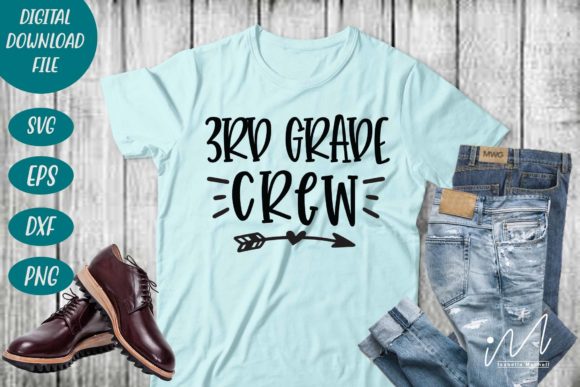
The phrase “3rd-grade crew” carries a specific energy. It is playful, communal, and slightly rebellious in a wholesome way. Visually, the design relies on bold, clear typography. For an embroidery designer, this is both a blessing and a challenge. Bold letters are easier to stitch cleanly than delicate scripts, but they require careful management of stitch density to avoid puckering the fabric.
My first impression was that the layout is balanced. It doesn’t feel cramped. The spacing between the letters suggests that the creator understands how thread spreads. When you convert these vector files into a machine embroidery design, that spacing becomes critical. If the letters are too close, the satin stitches will merge, creating a blob rather than legible text. From what I can see in the source files, there is enough breathing room to allow for standard satin or fill stitches without compromising readability.
Real-World Application: The Sweatshirt Test
To truly test a design, you have to imagine it on a finished product. I pictured this design on a heather grey youth-sized sweatshirt. This is a classic custom apparel item for back-to-school season or teacher appreciation gifts. The “crew” aspect implies a group, so this isn’t just for one child; it is for a classroom, a sports team, or a friend group.
When stitching on fleece or cotton-blend sweatshirts, the fabric has stretch. This is where the quality of your digitizing matters. If you use this SVG as a base for your embroidery software, you must ensure you are using a proper stabilizer. I would recommend a cut-away stabilizer for this type of garment to prevent the design from distorting after washing. The bold nature of the text means it will stand out beautifully against the textured fabric, provided you choose high-contrast thread colors. A navy blue thread on grey, or a bright white on black, would make the “3rd-grade crew” message pop.
Versatility Across Products
Beyond apparel, this design has legs in the craft business world. Consider a canvas tote bag design. Teachers love sturdy totes, and adding this embroidered motif turns a generic bag into a personalized gift that feels bespoke. Because the design is scalable, you can adjust it to fit smaller hoops for embroidered patch projects. Imagine iron-on patches that students can sew onto their backpacks. This transforms the digital asset into a tactile handmade product that kids actually want to wear.
For Etsy sellers and small shop owners, the inclusion of DXF and EPS files is a significant value add. It means you aren’t limited to embroidery. You can use the same design for vinyl cutting on tumblers or heat transfer on t-shirts, allowing you to offer a coordinated product line. However, as an embroidery specialist, my focus remains on how it stitches. The clean lines suggest it would work well as an applique design too. You could stitch the outline, place a contrasting fabric underneath, and then tack it down. This reduces stitch count and adds texture, which is great for larger items like pillow covers or blankets.
Technical Considerations and Pitfalls
While the design is robust, it is not foolproof. There are areas where you need to exercise caution. If you plan to stitch this on a cap or hat, remember that curved surfaces distort designs. The horizontal width of the phrase “3rd-grade crew” might need to be arched slightly in your embroidery software to look straight once stitched on the front panel of a cap.
Also, consider the hoop size. If you are using a 4x4 hoop, you might need to split the design or reduce it significantly, which could make the smaller details of the letters hard to resolve. Always check the dimensions in your software before hitting start. For tiny items like baby embroidery on onesies, ensure the text remains large enough to be legible. Tiny, dense stitching on thin baby fabric can cause stiffness and irritation, so keep the scale appropriate.
Another critical factor is the fabric texture. On toweling or rough linen, fine details get lost. This design is bold, which helps, but you should still run a test stitch on scrap fabric. Check if the running stitch outlines are sufficient to hold the fabric down before the main stitching begins. If not, you may need to add manual underlay in your digitizing software.
Commercial Viability and Branding
For those running a small shop product line, consistency is key. This design offers a professional look that builds customer trust. It doesn’t look amateurish. When a buyer sees clean, crisp lettering on a holiday embroidery project or a teacher gift, they perceive higher value. It enhances your brand consistency if you use similar styles across your catalog.
However, before selling, you must verify the licensing terms. Just because you have the SVG and EPS files does not automatically grant unlimited commercial rights for mass production. Always read the license included with the design assets. Assuming it allows for commercial use of finished physical items, this design is a strong contender for your spring and fall collections.
Final Verdict for Designers
The 3rd Grade Crew SVG Cur Files is a solid addition to your library. It is not just a pretty picture; it is a functional tool for creating finished products that resonate with a specific audience. Whether you are making sweatshirt embroidery for a school team or custom apparel for a boutique, the design holds up.
My advice? Download it, open it in your preferred software, and do a test run. Check the color contrast, adjust the density if needed, and pick the right stabilizer. Treat it with the respect a good design deserves, and it will serve your embroidery project well. It is a practical, versatile asset that bridges the gap between digital convenience and handmade quality.