Review: Halloween SVG Design Boo for Embroidery
As a designer who has spent countless hours digitizing and testing files for client projects, I approach every new machine embroidery design with a mix of curiosity and skepticism. We have all been there: downloading a cute graphic that looks perfect on screen but turns into a tangled mess of thread on the fabric. Today, I am taking a close look at the Halloween SVG Design Boo, specifically evaluating its potential for real-world application in a craft business setting.
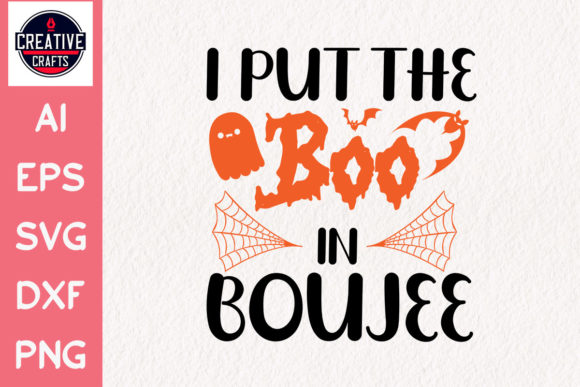
This isn’t just about whether the file opens correctly. It is about whether this specific quote design—"I put the boo in boujee"—can carry the weight of a finished product that customers will actually want to buy and wear. Let’s break down how this digital embroidery file performs when moved from the computer screen to the needle.
First Impressions and Visual Personality
The first thing that strikes me about this Graphics asset is its attitude. It is playful, modern, and taps directly into the current trend of sassy, text-based holiday decor. The phrase itself is a clever pun that appeals to a specific demographic: millennials and Gen Z shoppers who enjoy humor in their home goods and apparel. From a layout perspective, the balance between the word "boo" and the rest of the sentence suggests a design that relies heavily on typography.
For an embroidery project, typography is tricky. Unlike a simple pumpkin or ghost shape, text requires precise stitch placement to remain legible. My initial assessment is that this design would work best as a statement piece rather than a subtle accent. It demands attention, which makes it ideal for products where the message is the main selling point.
Real-World Application: The Tote Bag Test
To truly evaluate this file, I imagined using it for a custom tote bag design. Canvas tote bags are a staple for any Etsy seller or small shop product line, especially during the holiday season. The sturdy texture of canvas provides a stable base for stitching, which is crucial for text-heavy designs.
If I were stitching this onto a natural cotton canvas, I would likely opt for a high-contrast thread color, such as bright orange or stark white against a black bag. The stitch density becomes a critical factor here. If the letters are too thin, they might get lost in the weave of the fabric. If they are too dense, the bag could pucker. Since the download includes an AI file for Adobe Illustrator and an SVG file, I have the flexibility to adjust the scale before converting it into an embroidery format. This versatility is a huge plus for designers who need to adapt assets for different hoop sizes.
Sweatshirts and Apparel Considerations
Moving beyond accessories, let’s consider sweatshirt embroidery. A crewneck sweatshirt is a prime candidate for this type of humorous holiday quote. However, fleece and cotton blends behave differently than canvas. The stretch of the fabric means that without proper stabilization, the text could distort after washing.
When using this embroidery file on knit fabrics, I would recommend using a cut-away stabilizer to provide long-term support. The design’s suitability for custom apparel depends largely on how well the digitizer has handled the underlay stitches. While I cannot see the internal stitch structure of the SVG directly without converting it, the clean lines of the vector suggest that it should translate well into satin stitches for smaller letters or fill stitches for larger elements, provided the conversion is done carefully.
Navigating Technical Challenges
There are specific scenarios where I would advise caution when using this design. First, consider the fabric texture. If you are planning to stitch this onto a textured towel or a rough linen, small details in the font may not hold up. The "boo" element needs to be large enough to maintain clarity. Tiny serifs or intricate curves can easily become blobs of thread if the thread colors do not contrast sharply with the background.
Another area of concern is curved surfaces, such as caps or hats. Stitching text on a curved brim or front panel requires precise hooping and often a specialized cap frame. For a craft business owner, time is money. If this design requires excessive tweaking to sit flat on a cap, it might not be the most efficient choice for high-volume production. I would recommend testing it on a flat patch first, then applying the embroidered patch to the hat, which offers more control over the final look.
Color and Contrast Strategy
The success of this design hinges on contrast. In my experience, blackwork or monochrome stitching can look sophisticated, but for a Halloween theme, vibrant colors drive sales. I suggest creating mockups in both light and dark backgrounds. A white thread on a black shirt is classic, but consider metallic gold or silver threads for that "boujee" feel mentioned in the quote. This adds a tactile element that elevates the handmade product from simple craft to boutique quality.
Commercial Viability and Brand Consistency
For commercial embroidery professionals, the licensing terms are paramount. The product description notes that the download includes AI and SVG files, which are standard for design assets in the Crafts category. However, before selling finished items, you must confirm the specific license included with your purchase. Most SVG creators allow for physical end-product sales, but digital resale is typically prohibited. Always read the fine print to protect your business.
From a branding perspective, this design fits well with shops that focus on witty, modern holiday decor. It helps build brand consistency if your other products share similar typographic styles. It is not just a personalized gift; it is a statement piece that encourages social sharing, which can drive organic traffic to your online store.
Practical Designer Notes
Before you commit to a full production run, follow these steps:
- Test on scrap fabric: Always stitch out a sample on the exact material you plan to use for the final product.
- Check stitch density: Ensure the text is not too dense, which can cause puckering, or too sparse, which leaves gaps.
- Verify hoop size: Confirm that the scaled design fits comfortably within your machine’s hoop, leaving room for stabilization.
- Inspect small details: Zoom in on the vector file to ensure there are no stray nodes or broken paths that could confuse your digitizing software.
- Use proper stabilizer: Match the stabilizer type to the fabric weight and stretch.
In conclusion, the Halloween SVG Design Boo offers a trendy, marketable aesthetic for the holiday season. With careful attention to digitizing parameters and fabric selection, it can be a valuable addition to your library of embroidery projects. It bridges the gap between digital convenience and tangible quality, making it a solid choice for designers looking to expand their seasonal offerings.