Resilience in Thread: Reviewing the Tally Chart Design
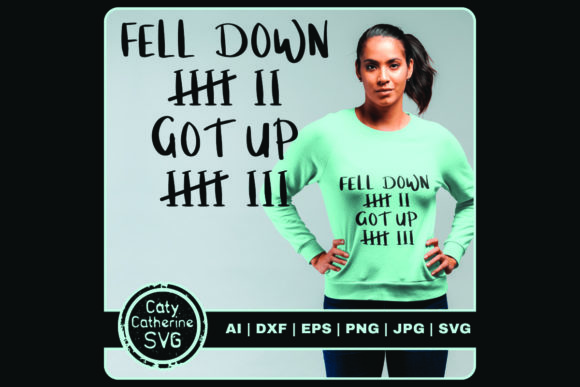
As a designer who has spent countless hours digitizing and testing embroidery files, I have learned that the most powerful designs are often the simplest. When I first loaded the Fell Down 7 Got Up 8 Tally Chart into my software, I was not looking for complexity. I was looking for clarity. In the world of machine embroidery, especially when dealing with inspirational quotes and motivational graphics, legibility is everything. This design, created by Caty Catherine, presents a unique visual challenge and opportunity because it relies on a graphic representation of resilience rather than just text.
The concept is straightforward yet profound. The tally chart format visually communicates the struggle and the triumph inherent in the phrase. For an experienced embroidery product reviewer, this is where the evaluation begins. Does the graphic translate well from a digital SVG cut file to actual thread on fabric? Can it withstand the mechanical limitations of an embroidery machine while maintaining its emotional impact?
First Impressions and Visual Personality
The immediate mood of the Fell Down 7 Got Up 8 Tally Chart is one of quiet strength. It does not shout; it states facts. The layout typically involves a series of tally marks, which are inherently linear and geometric. In the realm of Crafts and Graphics, geometric designs can be tricky. They require precise stitching to avoid looking jagged or misaligned. However, this simplicity is also its greatest asset. It fits naturally into modern minimalist aesthetics, making it suitable for a wide range of demographics, from strong women seeking empowerment apparel to men who appreciate stoic, understated design elements.
When evaluating this as a digital embroidery file, I look at the balance between positive and negative space. The tally marks need enough breathing room so that the stitches do not merge into a solid block of color. If the design is too dense, it loses its meaning. If it is too sparse, it may look incomplete. The key here is the translation of the "SVG Cut File" format into stitch data. Since the source is a vector-based SVG, the potential for clean lines is high, provided the digitizer has respected the original geometry.
Real-World Application: The Custom Sweatshirt Test
To truly understand the value of this design, I imagined a specific real-life scenario. A client approaches me for a custom order: a heavyweight, charcoal grey sweatshirt for a friend who has recently overcome a significant personal hurdle. They want something subtle, not a loud banner. The Fell Down 7 Got Up 8 Tally Chart is perfect for this. Placed on the left chest or centered on the back, it serves as a private reminder of resilience.
In this context, the design performs exceptionally well. The linear nature of the tally marks allows for efficient stitching. Unlike complex applique design work or dense fill stitch areas that can pucker lightweight fabrics, tally marks can often be executed with a combination of satin stitch for thickness or even a bold running stitch if a more rustic, hand-drawn look is desired. This versatility makes it a valuable asset for any craft business or Etsy seller looking to offer personalized products without excessive production time.
For small shop product lines, this design offers high perceived value. It tells a story. Customers buying a handmade product are often buying into the narrative. A tote bag featuring this tally chart becomes more than just a carrier; it becomes a statement piece. The same applies to embroidered patch creations. A patch with this design can be ironed onto jackets, bags, or hats, allowing the wearer to carry their story with them.
Technical Considerations for Embroiderers
While the design is visually appealing, practical execution requires attention to detail. Here are the critical factors I consider before hitting the start button on my machine:
- Stitch Density and Fabric Texture: Tally marks are essentially lines. On textured fabrics like terry cloth towels or thick fleece, thin lines can get lost. I recommend increasing the stitch width slightly or using a heavier thread weight to ensure visibility. Conversely, on smooth cotton or polyester blends, standard density works well.
- Hoop Size and Placement: This design is scalable, which is a major advantage. It can fit into a small 4x4 hoop for a baby onesie or a large 5x7 hoop for a pillow cover. However, always check the aspect ratio. Stretching the design too wide can distort the tally marks, making them look uneven. Maintain the original proportions to keep the graphic integrity intact.
- Stabilizer Selection: Because the design consists of multiple parallel lines, there is a risk of fabric pull-in if not properly stabilized. For stretchy fabrics like jersey knits used in custom apparel, a cut-away stabilizer is essential to prevent distortion after washing. For woven fabrics like those used in tote bag design or aprons, a tear-away stabilizer may suffice, but testing is crucial.
- Thread Color Contrast: The impact of this design relies on contrast. On dark fabrics, use light or metallic threads. On light fabrics, dark or bold colors work best. Avoid low-contrast combinations, such as grey thread on black fabric, unless the goal is a subtle, tonal effect.
Navigating Potential Pitfalls
There are scenarios where this design requires careful handling. Small hoop sizes can be problematic if the tally marks are too close together. The needle penetration points might overlap, causing thread breaks or bird nests. Always zoom in on your digitizing software to check for overlapping nodes. Additionally, curved surfaces like caps present a challenge. The flat geometry of the tally chart may distort on the curved panel of a baseball cap. In such cases, reducing the size and placing it on the side panel rather than the front center can yield better results.
Another consideration is the licensing. As an Etsy seller or creative entrepreneur, you must confirm the license terms provided by Caty Catherine. While many SVG files come with commercial use rights, it is vital to verify whether you can sell finished physical items, digital products, or both. Never assume. Check the documentation included with the design assets to ensure compliance and protect your business.
Enhancing Product Value and Brand Consistency
Integrating the Fell Down 7 Got Up 8 Tally Chart into your product line can enhance brand consistency if your brand focuses on empowerment, resilience, or mental health awareness. It adds a layer of depth to your finished product offerings. For holiday embroidery gifts, such as Christmas stockings or New Year’s resolution journals, this design resonates with the theme of new beginnings and overcoming past struggles.
When creating printable mockup images for your online store, showcase the design on various items. Show it on a baby embroidery item to appeal to parents wanting to instill strength early. Show it on a rugged canvas bag for outdoor enthusiasts. This versatility expands your target market. Buyers engage more with products that reflect their personal journey, and this tally chart is a universal symbol of persistence.
Final Verdict for Designers
The Fell Down 7 Got Up 8 Tally Chart is a robust addition to any embroidery designer’s library. It bridges the gap between simple graphics and meaningful messaging. Its success lies in its adaptability. Whether you are creating commercial embroidery for a boutique or making a personalized gift for a loved one, this design holds up under scrutiny. Just remember to test on scrap fabric, choose the right stabilizer, and respect the geometric integrity of the tally marks. With these precautions, you will produce a high-quality, professional-looking item that customers will cherish.